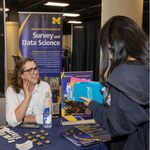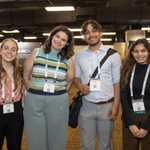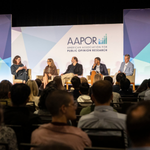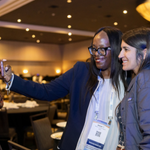
AAPOR 81st Annual Conference Recap

AAPOR 81st ANNUAL CONFERENCE

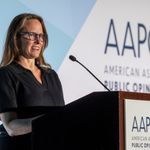
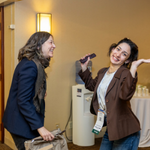
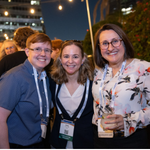
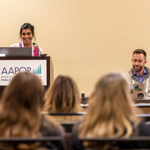
The AAPOR 81st Annual Conference brought our community together for an energizing and inspiring week in Los Angeles. Across plenaries, presentations, short courses, networking events, and informal conversations, attendees explored new ideas, shared emerging research, and strengthened the connections that make AAPOR such a vibrant professional community.

The conference may be over, but the conversations continue. Here’s a look back at some of the highlights from an unforgettable week in Los Angeles.

AAPOR 2026 By the Numbers

  • 1,147 attendees, which included 526 presenters, 257 conference volunteers, 281 first-time attendees, and 118 student attendees
  • 160 Sessions, including 459 papers, 86 posters, 4 Short Courses, 6 Idea Groups, and 8 Skill-Up Sessions
  • 51 sponsors and 45 exhibitors, whose generous support helped make this event possible
  • 15 Roper Awardees, 11 AAPOR Community Support Grants awarded, 15 Student Conference Travel Awardees, and 12 Student Inclusion Fellowship Awardees

Conference Photos

Videos

Daily Blog Recaps

Thank you to Ellen Hickman for her reflections on the conference.

Day 1: Wednesday, May 13

My reflections of the first day of the AAPOR 81st Annual Conference begin not at the beginning, but at the middle. From attending the mid-day Plenary Session, moderated by past president, Frauke Kreuter, I learned that truth is a multifaceted, moving target that we, as AAPORites, are trying to capture, model, or predict—and which can be further obscured, or revealed, by recent AI transformations.

Now framed with the quest for truth, I return to the beginning of the day.

Day 2: Thursday, May 14

My second day of AAPOR started early by sitting down with the Establishment Affinity Group, a table full of business researchers happy to share their experience. The warm introductions and discussions on sampling frames set the tone for an “enriching” day (haha!) of cross-national comparability research, conversations with fellow first-year AAPORites, a new UN Handbook release, and a congratulations to all award winners.

Day 3: Friday, May 15

The third day was the day not to miss! Throughout the abstract sessions, I appreciated the breadth of topics from questionnaire design to data linkage. Evan Sandlin [USC] shared a life history calendar tool that tracks residential timelines through Google Maps integration (street view included!). Brandon Pipher explained how administrative and survey datasets can be combined through dual-system estimation to capture observations missed by both lists, and Mark Klee showed how a composite auxiliary indicator offers model-based imputation of farm status [US Census Bureau].